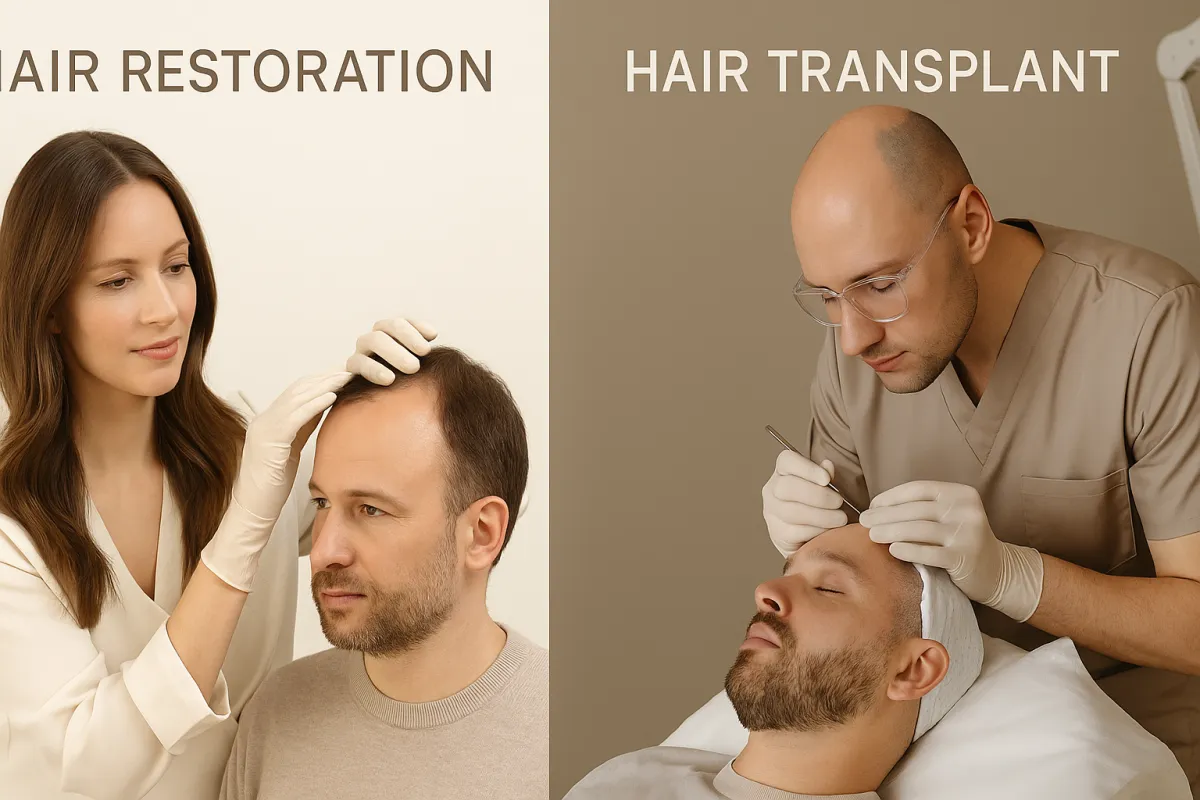
Hair Restoration vs. Hair Transplant: What's the Difference?
Hair restoration and hair transplantation are both legitimate approaches to treating hair loss — but they work very differently and are appropriate for different stages. Understanding the distinction helps you make the most informed decision.
Non-Surgical Hair Restoration (MedSpa)
Non-surgical options — PRP, exosome therapy, and LLLT — work by stimulating and revitalizing existing hair follicles. They are ideal for clients who still have viable follicles and want to slow or stop progression, thicken thinning hair, stimulate regrowth, or maintain results following a hair transplant. These treatments are non-invasive, require no downtime, and are significantly more affordable than surgical options.
Hair Transplant Surgery
A hair transplant surgically relocates follicles from a donor area to thinning or bald areas. The two main techniques are FUT (leaves a linear scar) and FUE (tiny punch marks). Transplants are best for clients with significant, stable hair loss and adequate donor supply.
Key Differences
- Invasiveness: Non-surgical vs. surgical
- Downtime: None vs. 1 to 2 weeks
- Cost: Significantly lower for non-surgical
- Best for: Active early loss (non-surgical) vs. stable significant loss (transplant)
Can You Combine Both?
Non-surgical restoration is frequently recommended post-transplant to optimize graft survival and maintain surrounding hair — producing better long-term results than transplant alone.
Not sure which is right for you? Book a hair restoration consultation for an honest assessment.