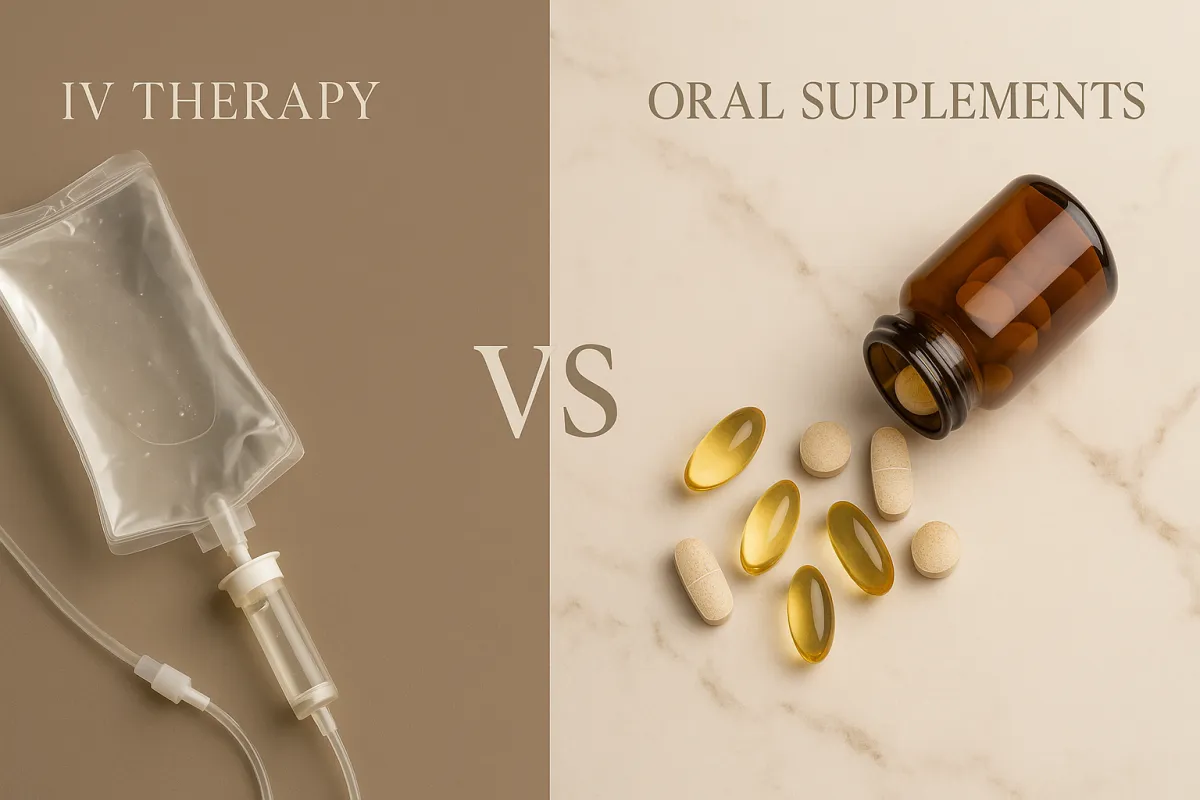
How IV Therapy Compares to Oral Supplements
The supplement industry is enormous — and many people spend hundreds of dollars monthly on oral vitamins and minerals. But how does IV therapy compare? Here's an honest breakdown of the key differences and when IV therapy offers a genuine advantage.
The Core Difference: Absorption
The most significant difference between IV therapy and oral supplements is bioavailability — the percentage of a nutrient that actually reaches your bloodstream and becomes available for your cells to use.
- Oral supplements: Absorption ranges from 10% to 50% depending on the nutrient, the supplement form, digestive health, and other factors. Many supplements are poorly absorbed by those with digestive issues, low stomach acid, or absorption disorders.
- IV therapy: Achieves near 100% bioavailability. The nutrient bypasses digestion entirely and enters the bloodstream directly.
When Oral Supplements Are Sufficient
For healthy individuals with good digestive function, maintaining adequate levels of many vitamins and minerals through a combination of diet and well-chosen oral supplements is entirely feasible. Daily Vitamin D, magnesium, and B12 supplementation, for example, can be effective when chosen carefully and taken consistently.
When IV Therapy Has a Clear Advantage
- When you need rapid restoration of depleted nutrients (illness, surgery recovery, intense athletic training)
- When you have digestive conditions that impair oral absorption
- When high concentrations are required that cannot be achieved orally (high-dose Vitamin C, NAD+)
- When you want immediate, measurable results within hours rather than weeks
The Best Approach: Both, Strategically
The most effective wellness strategy typically combines IV therapy for periodic intensive restoration with daily oral supplementation for ongoing maintenance. Your provider will help you design a protocol that maximizes both.
Discover the right wellness plan for your body. Book a consultation with our team today.