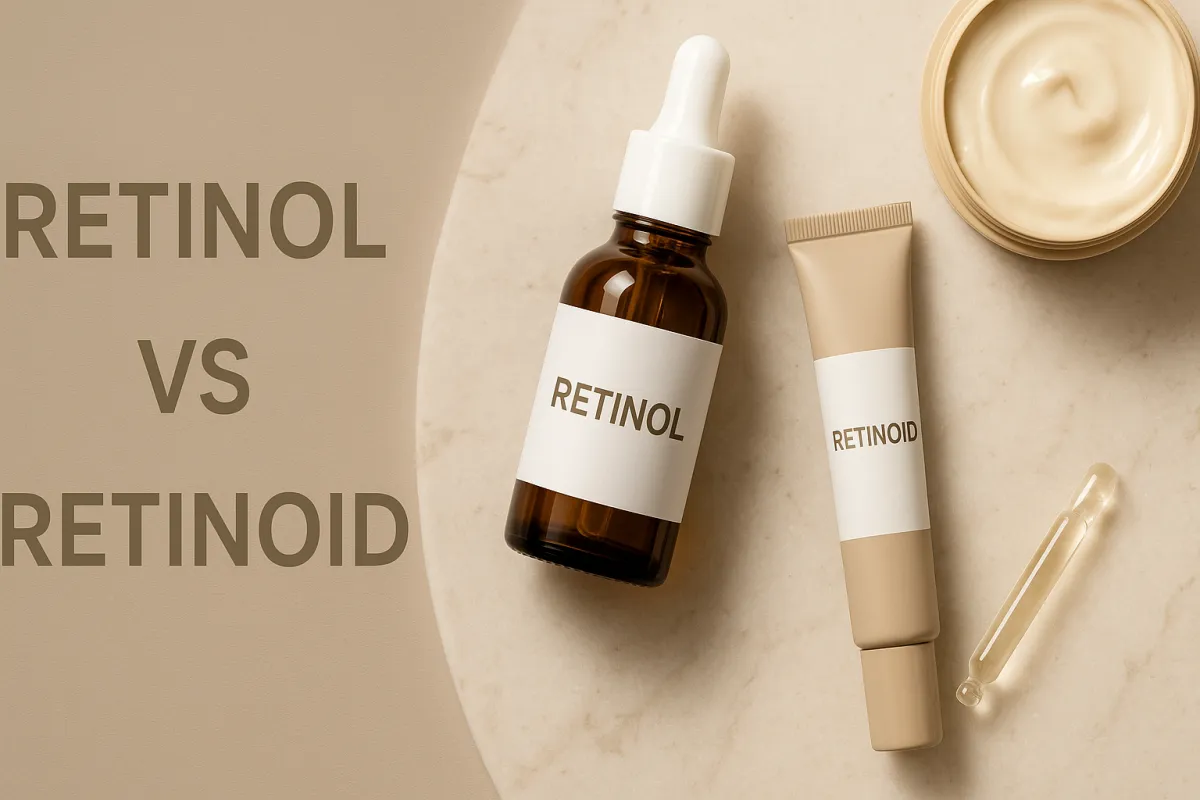
Retinol vs. Retinoid: What's the Difference and Which Is Right for You?
Retinoids are among the most evidence-backed skincare ingredients in existence — supported by decades of clinical research for anti-aging, acne treatment, and overall skin quality improvement. But the terminology is confusing. Here's your definitive guide.
The Retinoid Family: A Hierarchy of Strength
All retinoids are forms of Vitamin A that ultimately convert to retinoic acid in the skin — which is the active form that binds to skin cell receptors and produces results. The key difference between products is how many conversion steps are required:
- Tretinoin (prescription): The gold standard. Already retinoic acid — no conversion required. Most potent, fastest results, most likely to cause initial irritation. Available only by prescription.
- Retinaldehyde (retinal): One conversion step from retinoic acid. Significantly more potent than retinol, less irritating than tretinoin. The strongest over-the-counter retinoid available.
- Retinol: Two conversion steps from retinoic acid. The most widely available and commonly used OTC retinoid. Effective but slower-acting than prescription options.
- Retinyl esters (retinyl palmitate, etc.): Three or more conversion steps. The mildest and least effective. Found in many drugstore "anti-aging" products. Suitable for very sensitive skin as an introduction but limited in potency.
Which Is Right for You?
- Retinoid beginners: Start with a low-concentration retinol (0.025% to 0.1%) every other night
- Established retinol users wanting more: Consider retinaldehyde or consult a provider for prescription tretinoin
- Acne or significant aging concerns: Prescription tretinoin delivers the fastest, most meaningful results
- Sensitive or reactive skin: Start with retinol esters or low-concentration retinol, using a buffer method (apply over moisturizer)
Universal Retinoid Rules
- Apply at night only (retinoids are broken down by UV light)
- Always use SPF the following morning
- Start slowly — 2 to 3 nights per week — and increase frequency as tolerated
- Expect some initial dryness and peeling (the "retinoid purge") — this is normal and temporary
Want prescription-strength retinoids or personalized skincare guidance? Our providers can help. Book a consultation today.